
Sustainable Seafood for All: A Global Movement Now Within Reach
Today’s world propels the issue of environmental responsibility into a global commerce context in which the concept of sustainable seafood is not an afterthought but an imperative. To each conscious consumer, parent, chef, retailer, and international customer, the type of seafood they decide to purchase is not without consequence. In this, we delve into what sustainable seafood is, why it matters, how to shop for it—and importantly—how we deliver sustainable seafood around the globe so you can enjoy it wherever you are.
1. What is Sustainable Seafood?
1.1 Definition of the Term
To be called “sustainable seafood,” fish and shellfish must be caught or farmed in ways that protect healthy populations, minimize harm to the environment, and be managed so resources will be available for the future. Here are a few of the criteria listed by the MSC for a fishery to be defined as sustainable:
Assuring healthy populations of fish.
Smaller environmental footprint.
Work only at areas where the management is responsible.
Indeed, seafood traceability is very important in efforts towards the avoidance of fraud for consumer protection and in ensuring safety within the ecosystem.
1.2 Why It Matters
Choices we make about the kinds of seafood we eat can make all the difference for the health of our oceans and the viability of fisheries now and into the future.
For example:
More than 3 billion people from around the world depend on either wild-caught or farmed seafood as a major animal protein source altogether.
Of all marine fish stocks, about 85 percent are estimated to be fully exploited or overfished.
It ensures livelihoods in the coastal communities for those communities whose catches are done in a sustainable manner; it furthers the conservation of marine biodiversity, lessens environmental impact, and continues the resource into future generations.
No, sustainable seafood is not a nice-to-have; it’s an investment in the planet, in people, and in the future of food.
2. The Key Benefits of Sustainable Seafood
2.1 Environmental Benefits
Our seafood meets criteria set for sustainability; hence, through it, we contribute to curbing overfishing, protecting habitats, and reducing pressure on marine ecosystems. Indeed, according to sources, sustainable seafood preserves biodiversity, which ensures robust fish populations for years into the future.
Most seafood species have a carbon footprint below that of their land-based protein counterparts. Therefore, shifting a portion of diets to responsibly harvested seafood is one measurable way of reducing environmental impact.
2.2 Economic & Social Benefits
The socio-economic issues of these fishing communities are addressed by sustainable seafood through the maintenance of work practices and resilience development among small-scale fishers.
Certification schemes do yield real financial benefits, and certified fisheries do perform better in terms of compliance and environmental indicators.
2.3 Nutritional & Food Security Value
Seafood is a powerhouse of lean protein, omega-3 fatty acids, and other important vitamins and minerals. Food security means the most sustainable seafood in the world, as it keeps fish stocks in balance with health in the ecosystem.
That is to say, it makes sense for the planet; it does for people and tastes great on your plate.
3. Truly Sustainable Seafood: Identification Techniques
3.1 Certification Matters
Look for such certifications as:
MSC “blue fish tick” for wild catch seafood
Aquaculture Stewardship Council certificate for responsible farmed seafood
All of these labels mean third-party independent auditing, full traceability, and observation of environmental and social standards.
3.2 Supply Chain Transparency
Caught or farmed, and where from? Gear used: Was it processed responsibly? Traceability and transparency are crucial — just like sourcing the best spices for seafood requires knowing its origin.
3.3 Labeling and Packaging
Such products should have labels indicating origin, certification, species, and catching/farming method, among others, especially for online purchases and other international markets.
3.4 Diversify Species & Markets
Mixing species spreads the demand and reduces the pressure on any one stock. Rotate your seafood choices to include lesser-known sustainable species.
4. Why Choose Us for Your Global Supply of Sustainable Seafood?
4.1 Our Global Reach
We care about sustainable seafood delivery services across the world, from Douala, Cameroon, through London and New York to Tokyo, and every place in between. We handle all steps from export documentation through logistics to global shipment so that sustainable seafood crosses the globe.
4.2 Responsible Sourcing & Certification
Our seafood selection meets high standards of sustainability accredited by organizations such as MSC and ASC. Traceable through clear supply chains, it is processed with care for both people and the planet.
4.3 High Quality, Freshness & Safety
We combine sustainability with high quality: flash frozen or chilled, packed for freshness, and shipped in insulated packaging that meets the highest standards of food safety.
4.4 Kid & Family-Friendly Options
We know that families everywhere are looking for healthier protein options. We source seafood options to fit every age-appropriate taste: mild flavor, minimal bones, ready to cook — perfectly complemented with the best spices for seafood.
4.5 Commitment to Environment & Community
We’re so much more than commerce; we’re about stewardship. It’s so much more than the sale of fish; it’s about maintaining the ecosystems, supporting the coastal communities, reducing waste and packaging, and responsible products around the globe.
5. From Ocean to Table: How Our Global Sustainable Seafood Service Works
Step 1: Selection & Sourcing
This includes seafood products from fisheries and farms independently certified to meet the sustainability benchmarks for wild-caught and responsibly farmed species.
Step 2: Processing & Packaging
It is cleaned, portioned, and packed to the highest standards of freshness and food safety. It can be shipped anywhere in the world in temperature-controlled, insulated packaging.
Step 3: Logistics & Export
We provide all export documentation, including health certificates, origin certificates, and customs declarations, plus arrangements for shipment by global courier or freight services.
Step 4: Shipment & Arrival
Your order will be placed on a track to reach your area. Where possible, tracking and arrival updates can be provided. Store in the freezer or refrigerator upon receipt according to the guidelines to keep it in the best condition.
Step 5: Cooking & Enjoyment
Savor your sustainable seafood in a few simple, scrumptious recipes and take pride in the fact that you’ve chosen seafood that’s not only delicious but responsibly sourced — especially when seasoned with the best spices for seafood.
6. Delicious Recipes & Serving Suggestions Using Sustainable Varieties of Seafood
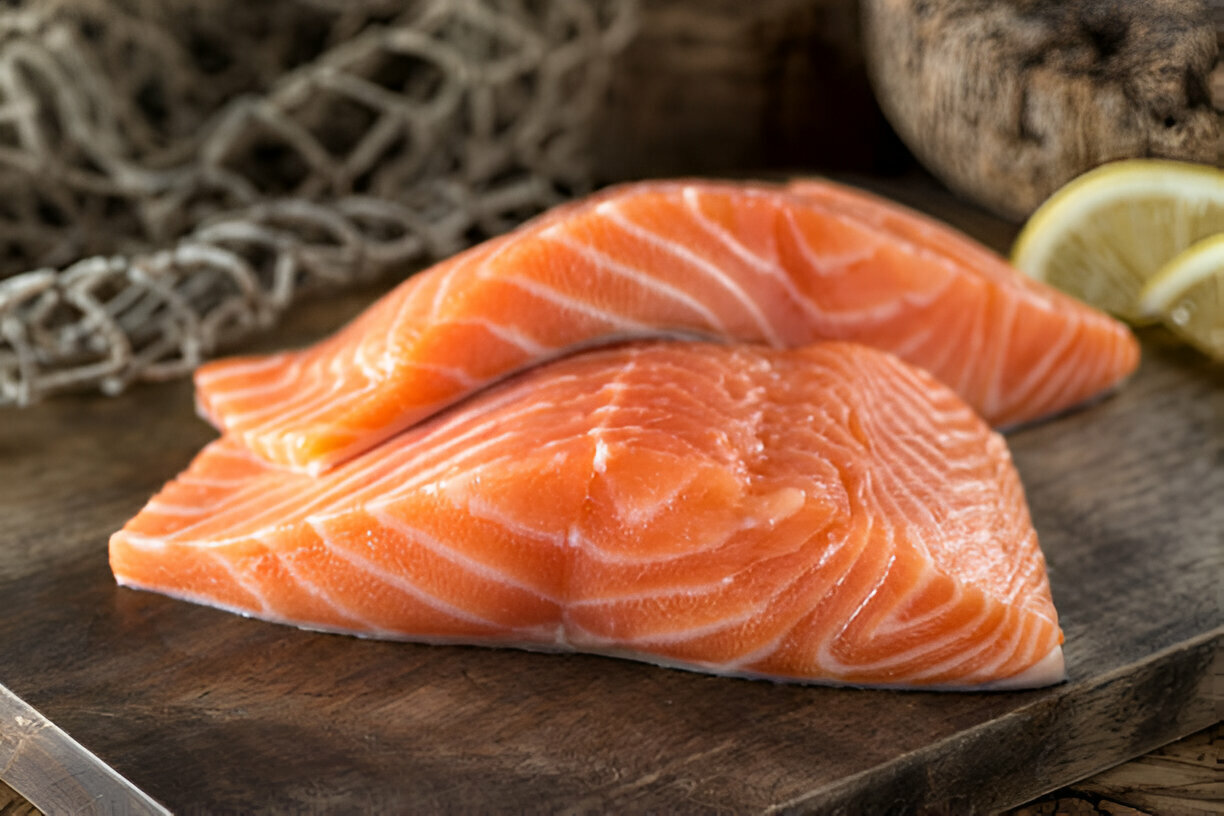
Recipe Example 1: Herb-Crusted Wild Salmon
Season with a few mild herbs, using olive oil on MSC-certified wild salmon; put in the oven at 180°C, baking for about 12 minutes. Serve with seasonal vegetables and whole-grain rice.
Recipe Example 2: Lemon-Garlic Farmed Sea-Bass Fillets
Pan-seared ASC-certified seabass: in a pan with garlic, fresh lemon zest, and parsley—quickly seared, finished in the oven—served with quinoa and green beans.
Recipe Example 3: Shellfish Medley Pasta
Use responsibly sourced, certified prawns and mussels. Lightly sauté garlic & chili and add in the tomato sauce; then toss in cooked, sustainable shellfish and pasta. Finish with fresh basil and a squeeze of lemon.
Such recipes are delicious while at the same time showing commitment to sustainable seafood and responsible choices on a global level — and they’re even more flavorful with the best spices for seafood.
7. Tips for Smart Consumers & Businesses
Buy regularly: Regular purchases of sustainable seafood send important market signals with respect to demand for responsible supply chains.
Think of what one would ask, such as where it is from, whether it is certified, how it was caught/farmed?
Educate: Raise awareness about sustainable seafood. Be part of the market transformation sweeping the nation!
Support certified labels: look for MSC, ASC, Friend of the Sea, and any other credible standards.
Varieties: Mix your choices; find less common species. A spread of demand will help reduce pressure.
Store seafood properly, use all edible portions whenever possible, and avoid over-purchasing.
Be globally-minded: By offering global delivery when buying sustainable seafood, you can source responsibly and season it with the best spices for seafood from any region.
8. Common Fears Overcome
Question 1: Is sustainable seafood more expensive?
Sure, sometimes sustainable seafood costs more, but all that means is that you’re investing in the long-term health of the ocean and better quality with responsible supply chains.
Issue 2: How can I trust sustainability claims?
Check for independent certification: MSC, ASC. What counts is traceability, clear labeling, and full supply-chain transparency.
Question 3: Can I order sustainable seafood overseas?
No matter which region you are from, you can source sustainable seafood from us, with proper global shipping, export documentation, and packaging. That is what we offer at our service.
Question 4: How about the freshness and time of delivery?
Cold-chain logistics are used, packaging allows subsequent tracking, and guidance is given on storage upon arrival.
Question 5: Does sustainable seafood really make a difference?
Yes, certified fisheries show better compliance with protection for both ecosystems and communities — and when combined with the best spices for seafood, the taste experience matches the ethics behind it.
9. Global Impact: Why Sustainable Seafood Matters Worldwide
Sustainable seafood meets global food security: 3 billion people in the world depend on seafood as a major source of protein. There are 147 countries and thousands of companies around the world selling certified and labeled sustainable seafood products.
This is a global trend in consumption based on environmental awareness: today’s consumer wants to be informed of the origin and production method of their seafood.
By buying sustainably sourced seafood and selling it to the world, we become that one cog in the value chain linking health-conscious consumers to responsible producers via global logistics, making sure people and the planet are in good health.
10. Frequently Asked Questions
Q: What is “sustainable” seafood?
A: It meets criteria for healthy populations and minimal ecosystem impacts, is managed responsibly, and is fully traceable.
Q: How can I be sure the seafood I’m ordering is sustainable?
A: Look for certifications, check origin and catch/farm method; is the supplier providing you with transparency?
Q: Is farmed seafood better than wild-caught?
A: Both can be sustainable if managed correctly. When wild populations are under pressure, farmed seafood from certified sources is a good alternative.
Q: How often should I eat seafood?
A: Most nutrition experts recommend having seafood regularly, choosing species that are sustainable — and preparing them with the best spices for seafood.
Q: What if I live far from the source?
A: The quality and sustainable seafood would still be accessible with global shipping and good packaging; just manage delivery time and storage correctly.
Countries We Ship To Include:
- United States
- United Kingdom
- Europe
- Canada
- Germany
- Italy
- UAE
- Saudi Arabia
- Singapore
- Japan
- South Africa
- Brazil
- Australia
- North America
- And many more….
11. Our Promise to You
Buying from us means you are assured of:
Certified sustainability: only seafood that meets international standards.
Global delivery: where you are in the world, we make shipping accessible.
Quality & freshness: premium seafood packaged and shipped for optimal taste and value.
Ocean-to-table ethical practices: fair, traceable, responsible — and perfectly complemented by the best spices for seafood to enhance every dish.