
Seafood Trends 2026: What the Global Market Has in Store
The seafood industry literally rides waves of transformation. And if you’re going to stay ahead—think globally, as we most certainly sell worldwide—then you need to know the top seafood trends 2026. Here are the shifts retailer, restaurateur, and seafood aficionado alike will be navigating:
1. Global Growth & Demand
The world is still eating more seafood, just a lot more slowly than before. Fish for food is projected to reach 177.4 million metric tons in 2026, according to the OECD–Food and Agriculture Organization outlook.
Towards FNB
Convention on Biological Diversity
OECD
The global seafood market size continues to increase; for example, a source estimated the fishing market size at approximately USD 428.8 billion in 2026.
Towards Fnb
Enormous possibilities—that is—for such a supplier who can deliver all over the world.
2. Sustainability & Responsible Sourcing
There is increasingly a demand by consumers globally for more ethical and traceable seafood. Demands for certification in areas like MSC and ASC, among others, in eco-labeling are stronger than ever.
EssFeed
It is not only that sustainable seafood is good for the planet; it is increasingly a differentiator in global markets, especially across borders.
3. Aquaculture Accelerates
As OECD-FAO specified, the wild catch will be constrained: capture fisheries production is expected to be flat, or even slightly decrease (-0.1% p.a.) over the period to 2026, while aquaculture will grow more slowly but also significantly.
OECD
This means a focus on farmed seafood, innovative aquaculture systems, and sourcing relationships that can ensure volume and traceability—particularly crucial for exporters and international suppliers.
4. Health, Nutrition & Premiumization
Seafood maintains the number one spot in high-value protein. According to a report by Rabobank, seafood is the fastest-growing animal protein globally.
foodingredientsfirst.com
They seek out omega-3-rich fish, clean-label products, minimally processed items, gourmet shellfish, etc. To the global seller, understand regional differences—Asia versus Europe versus the Americas—and be ready with premium lines, value-added products, and storytelling (health + origin).
5. Digital, E-commerce & Supply Chain Innovation
Seafood buying is no longer just via traditional markets and restaurants; e-commerce, direct-to-consumer shipping, frozen/IQF technology, and cold-chain logistics now play a key role.
Global Risk Community
If you sell worldwide, you must support shipping/packaging, cold-chain integrity, and provide traceability and transparency.
6. Regional Shifts & Trade Patterns
Some regions are surging. In Southeast Asia, for example, this is one of the most dynamic areas for seafood consumption growth.
Seafood Expo
Trade: Most countries expand exports; on the other hand, trade barriers, tariffs, and regulatory changes will matter. In some Southeast Asian countries, the size of exports is changing.
Vietnam Investment Review – VIR
It’s increasingly important that global sellers understand how to handle international regulations, tariffs, and shipping delays.
What These Trends Mean For You – Global Seafood Sales
Because we ship globally, let’s translate these big-picture seafood trends 2026 into actionable insights for your business and your customers.
A. Global Reach Means Global Expectations
Customers in Europe will require different species, packaging, and certifications than the customers in either Africa or Asia.
Time zones, shipping logistics, customs, duties—all matters.
Instead of just saying “we deliver worldwide”, show how you manage freshness, traceability, and speed.
Offer region-specific menus, such as frozen fillets for a certain region and live/whole seafood in areas where it’s allowed and viable.
B. Emphasize Sustainability & Story
Sustainable credentials are not an option. Certification, origin of catch/farm, eco-practices should be mentioned in marketing the products to global customers.
Storytelling: “From sustainable farm in X country, traceable, shipped fresh/frozen to your port.”
Conform to consumers’ values: health, planet, quality.
C. Premiumisation & Value-added Products
Sell more than commodity fish; sell premium species, wild/specialty, ready-to-cook, or value-added seafood. Sell gourmet options.
Today, consumers increasingly pay for convenience, health, and experience.
Highlight nutrition, omega-3, lean protein, and emphasize the premium features.
D. Logistics, Packaging & Quality Assurance
You need to ensure cold-chain, minimum disturbance, robust packaging, and clarity of shelf-life when shipping internationally.
Consider frozen IQF, vacuum-packed fillets, and live shipping where possible.
Let me emphasize it for you: “We export from, certified, packed and shipped within 48 hours, tracking number, customs docs included.”
E. Localisation & Market Intelligence
Segment offerings by market: For example, shrimp and shellfish may lead in one region while another may prefer smoked fish.
Understand local regulations around imports, tariff regimes, language, and payment preferences; preferred sizes/portions.
Collect and use data on trending species in each region, competitor pricing, and consumer demand.
Top 10 Seafood Trends to Watch in 2026
The following is a robust list of specific, fact-based seafood trends 2026 that we’re seeing and are relevant to our global seafood business.
Rise of farmed, high-yield species — Aquaculture will become increasingly dominant as capture fisheries level off.
OECDThe traceability technologies will require blockchain, IoT, and sensor systems installed inside the fish farms and supply chains.
EssFeedSmoked, Cured & Gourmet Seafood Snacks — Smoked fish market growth is strong, reflecting demand for convenient premium snacks.
GlobeNewswireThis includes e-commerce and direct-to-consumer export models, where consumers increasingly purchase seafood worldwide via online platforms.
Global Risk CommunityMore plant-based & cultured seafood alternatives — While still niche, alt-seafood is gaining attention for sustainability reasons.
EssFeedPremiumisation of species — This means paying more for “sushi-grade”, wild-caught, or sustainably farmed seafood.
EssFeedThis demand is driven by the rise of the middle-class population in Asia-Pacific, Latin-America, and Africa.
Seafood ExpoPackaging and convenience innovations — IQF, vacuum pack, snack packs; improvement in cold-chain logistics.
RedditRegulation and trade are complex, involving tariffs, sustainability regulations, and anti-dumping duties that will affect world trade.
Vietnam Investment Review – VIRHealth and wellness credentials position seafood in heart-healthy, brain-enhancing diets, with a focus on nutrition and clean labels.
foodingredientsfirst.com
Using These Trends to Grow Your Business
Step 1: Audit Your Product Offering
Which species will you be offering? Are they in line with premium/trending items such as shrimp, salmon, shellfish, value-added fillets?
Are your products certified to be sustainable, or farmed using best practices?
Can you supply frozen/IQF or value-added to distant markets from source?
Step 2: Improve Your Global Logistics & Shipping Process
Ensure cold-chain integrity. Extra care is to be taken for freshness, packaging, and customs when shipping worldwide.
Provide shipping zones, for instance: “We ship from our processing hub in [Country] to [Region: Europe, Middle East, Africa, Asia, Americas] with 3-10 day delivery depending on location.”
Explain the following: export documentation, customs clearance, shelf life upon arrival.
Step 3: Promote Your Story & Value Proposition
Leverage blog posts, videos, and infographics: “From ocean/farm to plate”; “traceable, sustainable, global delivery.”
Adapt your message to different markets; for instance: “In Europe, we prioritize MSC-certified wild salmon. In Africa, we offer frozen IQF tilapia and shrimp delivered with cold-chain.”
Emphasize health: “Our seafood is high in value protein, omega-3, and low in fat—appropriate for the health-conscious consumer globally.”
Step 4: Localise for Global Markets
Website/language: Provide multicurrency pricing, shipping zones, local payment methods.
Adapt the size/package of the product: smaller portions in some markets, bulk in others.
Understand the regulatory/tariff environment: Some countries may require certain certificates or face duties.
Step 5: Position for 2026 and Beyond
Follow the emergence of species, shortage in supply, and premium trend. Develop and maintain relations with farms/fisheries that have the potential to grow.
Invest in branded value-added products: ready-to-cook seafood, snack packs, smoked fish.
Leverage e-commerce, direct shipping, and subscription models to global customers.
Why Choose Us for Your Worldwide Seafood Needs
Global Shipping Capabilities
We distribute on all continents, be it Asia, Africa, Europe, or the Americas. Our logistics network allows for the delivery of seafood to their various destinations either fresh or frozen.
Quality and Traceability
All the products we deal in are traceable to source. We emphasize sustainable sourcing in combination with key certifications that matter in global markets.
Large Variety & Premium Options
Starting from wild-caught premium species to responsibly farmed seafood and gourmet value-added options. You will be able to access first-class items.
Market-Tailored Service
We know different markets have different needs. That is why we pack, portion, certify, and deliver according to your needs.
Forward Thinking
Having an eye on seafood trends 2026 and beyond, we invest in innovation so that you stay ahead: packaging, cold-chain, and value-added lines.
Frequently Asked Questions (FAQ)
Q: Can you ship seafood worldwide?
Yes, we do have logistics partners, cold-chain protocols, and support for export documentation. We cover major regions of the world and are further expanding into newer ones.
Q: How do you ensure freshness for distant markets?
We use IQF technologies, vacuum-packing, and fast shipping so that the product will reach you at its best. Shelf-life and storage instructions are also provided by us.
Q: Are the products sustainable and traceable?
Yes, sustainability is first and foremost. We buy only from farms/fisheries that are certified or follow best practices. Every batch can be traced back to source and the production methodology.
Q: What is the trending seafood of 2026?
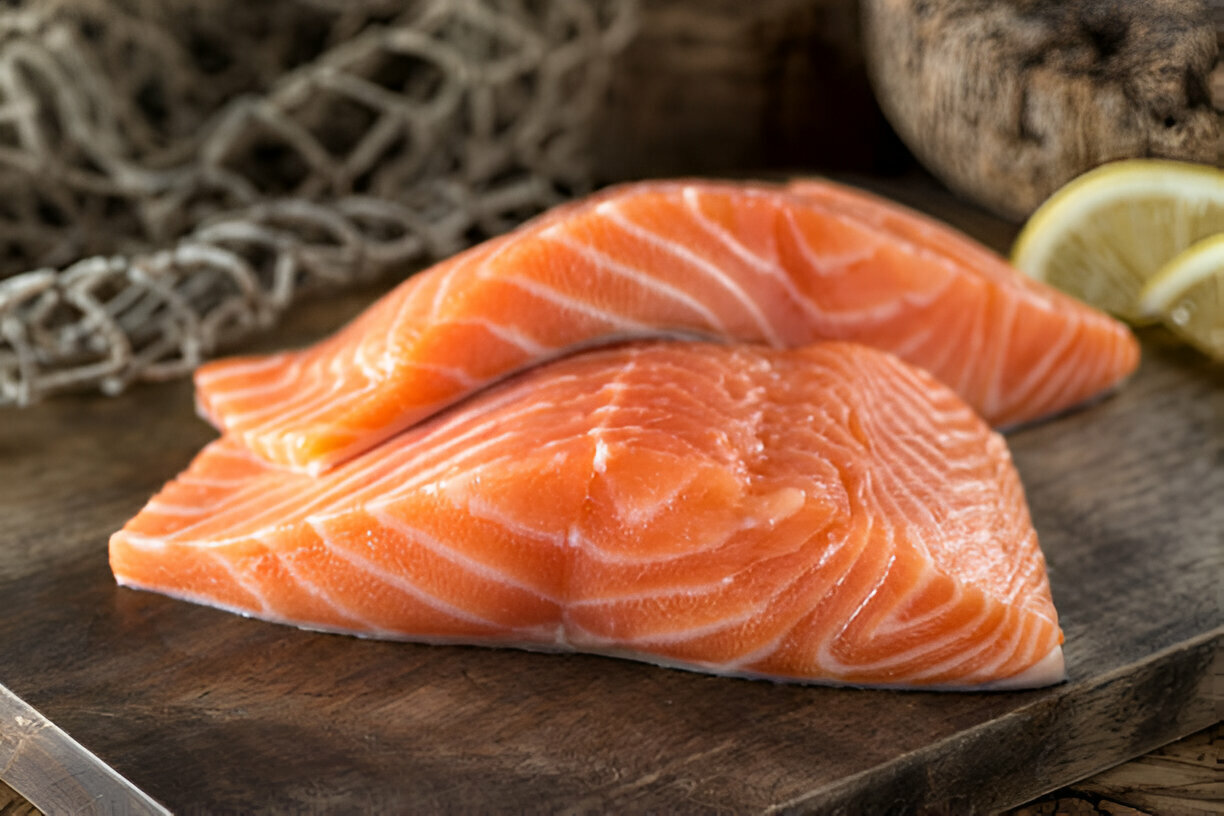
The products gaining momentum in today’s market include shrimp, shellfish, premium fish fillets such as salmon, seabass–sea bream, smoked seafood, value-added ready-to-cook items, and convenience snack-style seafood. EssFeed
Q: How can I identify what to sell to my local market?
Look at consumer preferences, existing supply chains, shipping costs, and regulatory environment. Choose species with good margin, trending demand, manageable logistics, and sustainability credentials.
Countries We Ship To Include:
- United States
- United Kingdom
- Europe
- Canada
- Germany
- Italy
- UAE
- Saudi Arabia
- Singapore
- Japan
- South Africa
- Brazil
- Australia
- North America
- And many more….
Conclusion
The seafood industry enters a dynamic phase as we head into 2026. Growth is global, consumer expectations are higher, and the competition for premium, sustainable supply chains is intense. For a business that ships worldwide — like us — this is a golden opportunity.
By aligning your offering with the big seafood trends 2026 — sustainability, premiumization, e-commerce, logistics, and regional demand shifts — you will set yourself up not just to survive but to thrive.
Remember, it is not “we ship seafood worldwide” but “we deliver premium, traceable, sustainable seafood globally, crafted for your market, with exceptional logistics and service.”
Let’s do this so that when your customer in Tokyo, Paris, Lagos, or New York thinks of premium seafood, they think of you.