The Ultimate Guide to Cooked Fish Signs: How to Identify Safe, Fresh & High-Quality Cooked Fish and Why We Export It Worldwide
Introduction
While cooking fish seems to be rather straightforward, how to tell if fish is actually done, safe to eat, and of good quality becomes an art for any consumer, chef, or food business. Whether one cooks at home, manages a restaurant, or provides their customers with reliable seafood products, understanding cooked fish signs is important both for safety and flavor.
This comprehensive guide will walk you through everything you need to know to recognize the cooked fish signs and how to perfectly prepare your seafood every time. More importantly, we show why these signs matter and how our company has made sure that each product of cooked fish it supplies meets the highest global standards, proudly shipping premium cooked fish to customers around the world.
This is your guide to identification of the visual, textural, and aromatic characteristics of properly cooked fish from a quality international purveyor.
Why Cooked Fish Signs Matter
Before going into the details, let’s explore why paying attention to the cooked fish signs is important.
1. Food Safety
Undercooked fish can contain parasites or injurious bacteria. Overcooking fish makes it dry and rubbery and less nutrient-dense.
2. Taste and Texture
Properly done means flaky, juicy, and even that sea sweetness only a properly cooked fish can give to one.
3. Quality Assurance
Establishing cooked fish signs for customers will prevent disappointment. For suppliers like ourselves, such indications guide strict quality control measures to ensure excellence at all times.
4. Global Trade Standards
Because we export our ready fishery products to various customers all over the world, international requirements on food safety are obligatory. Understanding the cooked fish signs helps identify to customers that what they get is authentically premium and safely prepared.
Chapter 1: The Visual Signs of Properly Cooked Fish
1. Opaque Color
Raw fish is translucent, while cooked fish becomes opaque.
White fish—cod, haddock, and tilapia—produce bright white.
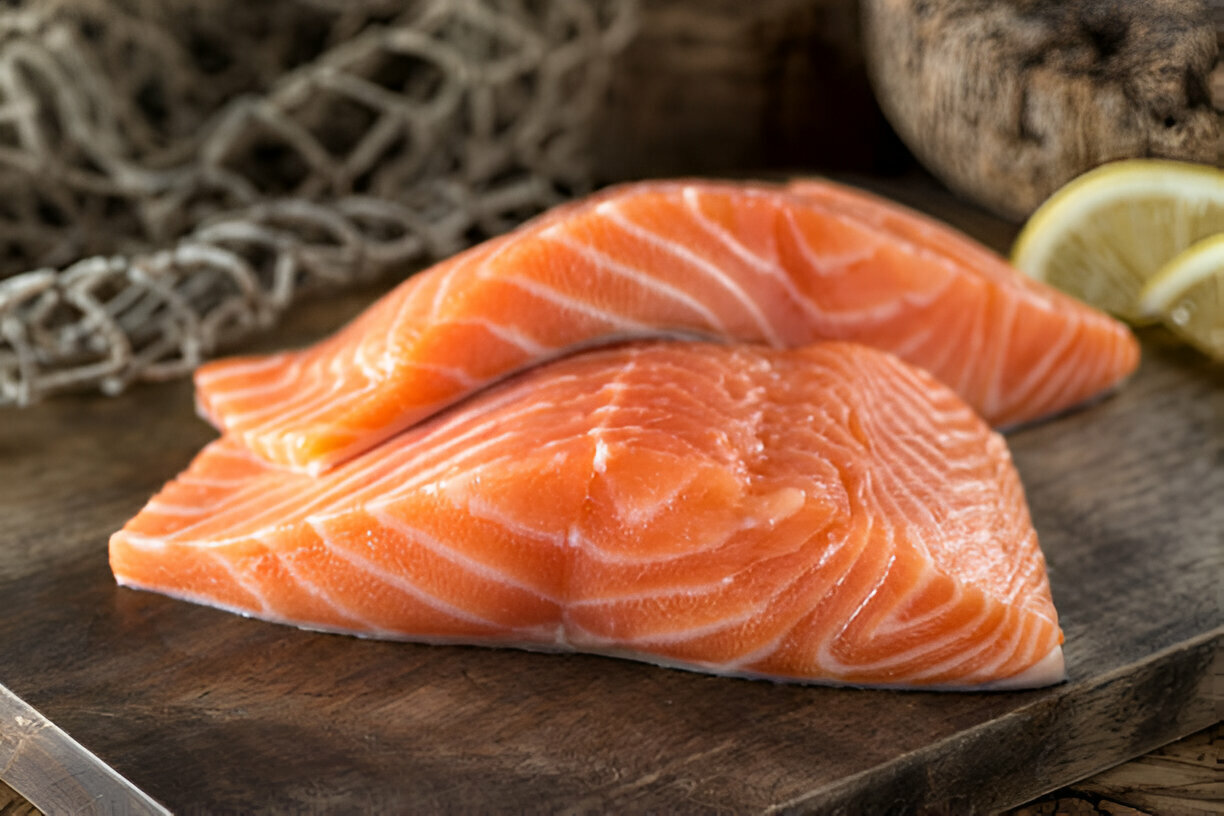
Salmon changes from a deep translucent orange to a lighter pinkish orange.
Tuna lightens depending on desired doneness.
Shellfish, such as shrimp, turn pink with bright red tails.
If you find the fish is still translucent in the thickest part, it is not cooked enough.
2. Flaking Flesh
This is one of the most reliable cooked fish signs.
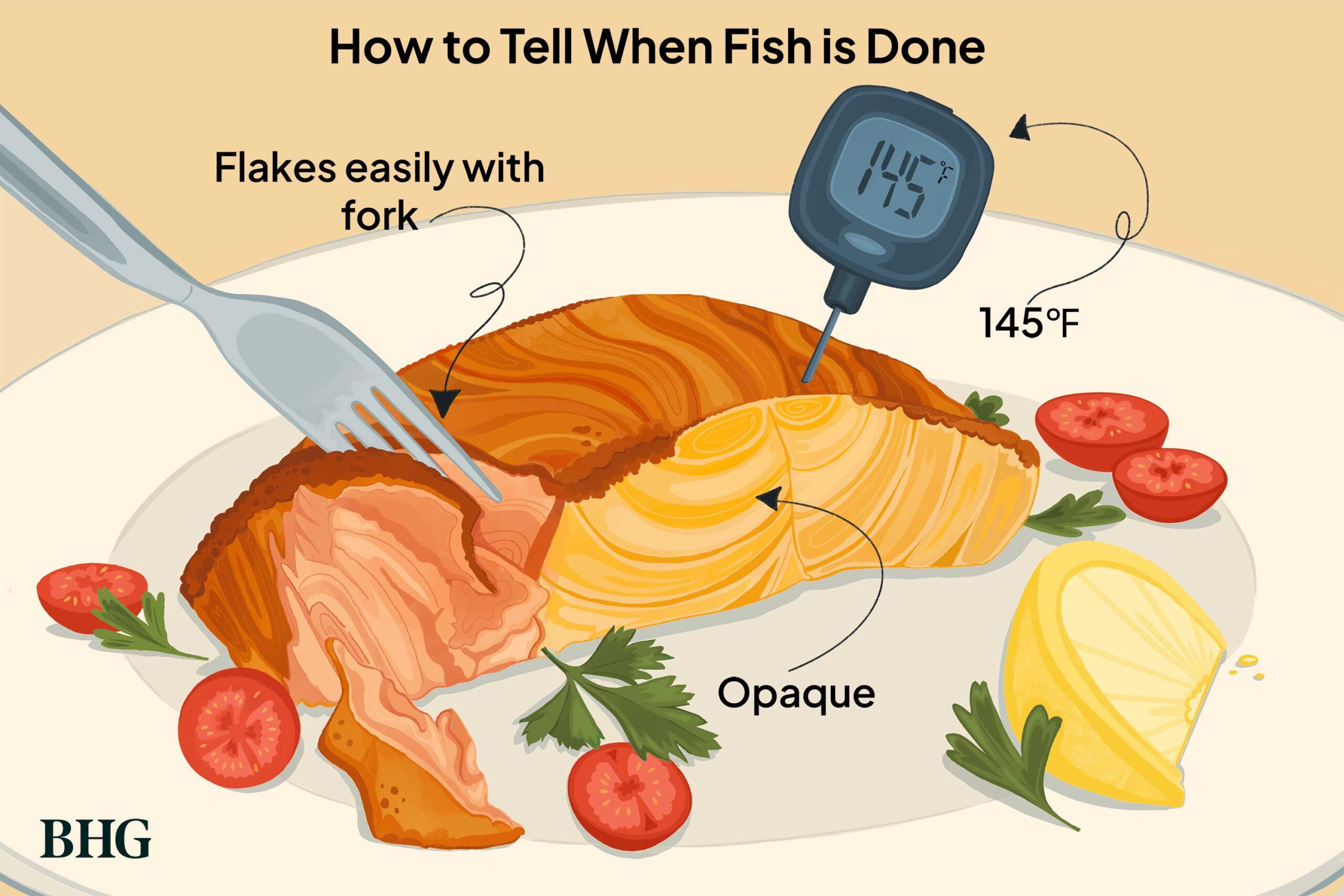
Insert the fork into the thickest part at a 45-degree angle.
If it flakes easily—separating into tender layers—it’s cooked.
If this resists or seems mushy, the cooking is not complete.
3. Juices Run Clear
Cooked fish will let out clear liquid.
A milky or cloudy liquid indicates undercooking.
4. Even Coloring
This could show uneven heating or raw spots.
We avoid this because our production facilities employ precision temperature control, so that every single batch of fish we export is uniformly cooked to perfection.
Chapter 2: Texture-Based Cooked Fish Signs
1. Firm but Not Tough
Perfectly cooked fish is:
Firm enough to hold shape
Soft enough to cut smoothly
Moist but not mushy
When overcooked, fish becomes rubbery or chalky.
Undercooked fish is slimy or too soft.
2. Internal Consistency
Thicker pieces should be as done as the thinner portions.
Commercial suppliers of cooked fish, such as ourselves, would use industrial steaming, baking, or poaching systems that ensure even cooking through, which home cooking so often has difficulty achieving.
Chapter 3: Aroma and Flavor as Indicators of Cooked Fish
1. Mild, Clean Scent
Fresh and properly cooked fish smells:
Mild
Slightly savory
Clean, almost ocean-like
Strong or “fishy” odors signal either poor handling or overcooking.
2. Balanced Flavor
Perfectly cooked fish provides:
Natural sweetness
Delicate briny notes
Balanced moisture
Flavor becomes metallic or bland because of uneven cooking.
This standardized cooking, coupled with rapid chilling, has ensured a consistent flavor profile in our range of cooked fish products for our worldwide customer base.
Chapter 4: Temperature — The Scientific Cooked Fish Sign
Food safety bodies recommend that fish be cooked to 145°F (63°C) measured at the thickest point.
Professional kitchens, as well as all seafood suppliers, including our factories, use digital temperature probes and automated systems that are able to provide this exact temperature.
At home, even a simple food thermometer can prevent:
Undercooking risks
Dryness from overcooking
Texture damage
Temperature is one of the most reliable cooked fish signs, in particular, for commercial kitchens and food retailers.
Chapter 5: Signs of Cooked Fish for Various Species
Various fish types show different cooked fish signs, and since we ship species anywhere in the world, here is how to go about each.
White Fish: Cod, Tilapia, Haddock
Turns bright white
Flakes widely and easily
Has mild smell
Salmon
Semi-opaque pink
Fat droplets (“albumin”) surface when done
Flakes, but remains moist
Tuna
Often cooked less than other fish:
Rare: deep red center
Medium: pink center
Well done: almost completely opaque
Shellfish
Shrimp
Turns pink
Forms a C-shape
Tight O-shape indicates overcooking
Scallops
Opaque white
Slightly springy
Crab/Lobster
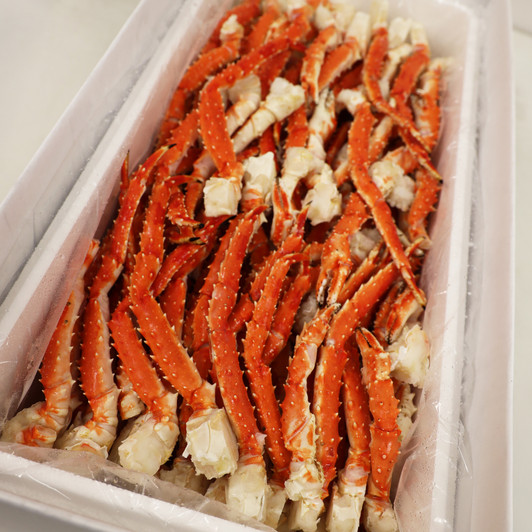
Shell turns bright red
Flesh is white, firm, moist
Our overseas customers regularly place orders for mixed cooked seafood shipments. Our quality control team applies different indicators for cooked fish signs for every species in order to achieve perfect results.
Chapter 6: Common Mistakes to Avoid When Checking Cooked Fish
Even professionals can get it wrong while looking out for cooked fish signs. In this guide, we outline some of the most common problems one faces and how to avoid them.
Mistake #1 — Only Checking the Surface
Fish can be raw internally yet appear cooked on the outside.
Always check the thickest part.
Mistake #2 — Failure to Consider Carryover Cooking
Fish continues cooking after the heat has been removed.
Remove from heat just as it reaches ideal doneness.
Mistake #3 — Overcooking to “Be Safe”
Overcooking will destroy the fragile structure of fish.
Using scientific signs of doneness can avoid this.
Mistake #4 — Relying on Color Alone
Color varies between species.
Count on:
Flaking
Temperature
Texture
Advanced sensors in our global supply system automatically terminate cooking at optimal doneness, thus eliminating these common mistakes.
Chapter 7: Cooked Fish Signs in Commercial Production
Because we export cooked fish to every part of the world, our processing must be according to the most stringent safety and quality conventions. Here’s how we apply cooked fish signs industrially:
Stage 1: Raw Material Inspection
Only premium-grade fish is used, sourced from trusted farms and fisheries.
Stage 2: Controlled Cooking
Industrial ovens and steamers ensure:
Full temperature uniformity
Exact timing
Even doneness
Cooked fish signs are digitally monitored through sensor data.
Stage 3: Visual and Manual Inspection
Quality experts confirm:
Opaque appearance
Proper flaking
Even colour
Fresh aroma
Stage 4: Rapid Cooling & Packaging
We chill cooked fish within minutes to preserve texture and flavor.
This ensures that our global customers get the same quality we produce locally.
Chapter 8: Why Our Company Is a Leading Worldwide Supplier of Cooked Fish
Our range of cooked fish products has won the confidence and satisfaction of thousands of restaurants, hotels, wholesalers, and retail chains. Here’s why.
1. Global Shipping and Logistics
We export our value-added cooked fish products to any destination in the world, offering:
Refrigerated air freight
Insulated ocean freight
Vacuum-sealed packaging
Bulk, retail, and custom orders
2. Technology Offers Consistent Quality
Automated monitoring guarantees that each batch meets the cooked fish signs:
Perfect texture
Safe temperature
Visual consistency
Long-lasting freshness
3. Adherence to International Standards
We adhere to:
HACCP
ISO food safety
FDA/EFSA standards
Export certifications
4. Competitive Pricing for Large Orders
We offer scalable pricing for:
Hotels
Restaurants
Distributors
Supermarkets
Food factories
5. Various Value-Added Cooked Fish Products
We export:
Cooked fillets
Cooked portions
Cooked seafood mixes
Ready-to-consume cooked fish products
Cooked shrimp, crab, salmon, tuna, white fish
We provide our customers with reliability and consistency in Europe, Asia, North America, Africa, and the Middle East.
Chapter 9: Proper Storage and Handling of Cooked Fish
Proper handling after the cooked fish signs are recognized is important.
Refrigeration
Store within 2 hours of cooking.
Store at 4°C (40°F) or below.
Freezing
Freeze immediately in airtight packaging.
If frozen properly, cooked fish will keep up to 3 months with minimal loss in quality.
Reheating
Heat to 165°F (74°C) for safety.
Avoid overcooking by using reheating methods like steaming or baking on low heat.
Chapter 10: Frequently Asked Questions About Cooked Fish Signs
Q: Can fish be slightly pink and still be cooked?
Yes—slight pinkness is normal for salmon and tuna, but always check both texture and temperature.
Q: Is fish always flaky?
Flaking is a good indicator but not the only one. Use it in conjunction with temperature checks.
Q: Do you ship cooked fish to my country?
Yes, we export worldwide. Just give us the region, and we provide the shipping details.
Q: What type of packaging do you use?
Vacuum-seal, MAP packaging, and export-grade frozen packs for freshness.
Countries We Ship To Include:
- United States
- United Kingdom
- Europe
- Canada
- Germany
- Italy
- UAE
- Saudi Arabia
- Singapore
- Japan
- South Africa
- Brazil
- Australia
- North America
- And many more….
Conclusion
Whether one is a home cook, professional chef, or seafood buyer, an understanding of cooked fish signs is important. Major concerns with respect to safety and quality will include texture, color, temperature, flaking, aroma, and consistency.
As a global supplier, these indicators are in place for every stage of production to ensure that each and every cooked fish product we deliver globally meets the highest standards of safety and excellence.
If you are in need of a reliable international source of value-added cooked fish, we are here to serve you wherever you may be in the world.
The Ultimate Guide to Cooked Fish Signs: How to Identify Safe, Fresh & High-Quality Cooked Fish and Why We Export It Worldwide
Introduction
While cooking fish seems to be rather straightforward, how to tell if fish is actually done, safe to eat, and of good quality becomes an art for any consumer, chef, or food business. Whether one cooks at home, manages a restaurant, or provides their customers with reliable seafood products, understanding cooked fish signs is important both for safety and flavor.
This comprehensive guide will walk you through everything you need to know to recognize the cooked fish signs and how to perfectly prepare your seafood every time. More importantly, we show why these signs matter and how our company has made sure that each product of cooked fish it supplies meets the highest global standards, proudly shipping premium cooked fish to customers around the world.
This is your guide to identification of the visual, textural, and aromatic characteristics of properly cooked fish from a quality international purveyor.
Why Cooked Fish Signs Matter
Before going into the details, let’s explore why paying attention to the cooked fish signs is important.
1. Food Safety
Undercooked fish can contain parasites or injurious bacteria. Overcooking fish makes it dry and rubbery and less nutrient-dense.
2. Taste and Texture
Properly done means flaky, juicy, and even that sea sweetness only a properly cooked fish can give to one.
3. Quality Assurance
Establishing cooked fish signs for customers will prevent disappointment. For suppliers like ourselves, such indications guide strict quality control measures to ensure excellence at all times.
4. Global Trade Standards
Because we export our ready fishery products to various customers all over the world, international requirements on food safety are obligatory. Understanding the cooked fish signs helps identify to customers that what they get is authentically premium and safely prepared.
Chapter 1: The Visual Signs of Properly Cooked Fish
1. Opaque Color
Raw fish is translucent, while cooked fish becomes opaque.
White fish—cod, haddock, and tilapia—produce bright white.
Salmon changes from a deep translucent orange to a lighter pinkish orange.
Tuna lightens depending on desired doneness.
Shellfish, such as shrimp, turn pink with bright red tails.
If you find the fish is still translucent in the thickest part, it is not cooked enough.
2. Flaking Flesh
This is one of the most reliable cooked fish signs.
Insert the fork into the thickest part at a 45-degree angle.
If it flakes easily—separating into tender layers—it’s cooked.
If this resists or seems mushy, the cooking is not complete.
3. Juices Run Clear
Cooked fish will let out clear liquid.
A milky or cloudy liquid indicates undercooking.
4. Even Coloring
This could show uneven heating or raw spots.
We avoid this because our production facilities employ precision temperature control, so that every single batch of fish we export is uniformly cooked to perfection.
Chapter 2: Texture-Based Cooked Fish Signs
1. Firm but Not Tough
Perfectly cooked fish is:
Firm enough to hold shape
Soft enough to cut smoothly
Moist but not mushy
When overcooked, fish becomes rubbery or chalky.
Undercooked fish is slimy or too soft.
2. Internal Consistency
Thicker pieces should be as done as the thinner portions.
Commercial suppliers of cooked fish, such as ourselves, would use industrial steaming, baking, or poaching systems that ensure even cooking through, which home cooking so often has difficulty achieving.
Chapter 3: Aroma and Flavor as Indicators of Cooked Fish
1. Mild, Clean Scent
Fresh and properly cooked fish smells:
Mild
Slightly savory
Clean, almost ocean-like
Strong or “fishy” odors signal either poor handling or overcooking.
2. Balanced Flavor
Perfectly cooked fish provides:
Natural sweetness
Delicate briny notes
Balanced moisture
Flavor becomes metallic or bland because of uneven cooking.
This standardized cooking, coupled with rapid chilling, has ensured a consistent flavor profile in our range of cooked fish products for our worldwide customer base.
Chapter 4: Temperature — The Scientific Cooked Fish Sign
Food safety bodies recommend that fish be cooked to 145°F (63°C) measured at the thickest point.
Professional kitchens, as well as all seafood suppliers, including our factories, use digital temperature probes and automated systems that are able to provide this exact temperature.
At home, even a simple food thermometer can prevent:
Undercooking risks
Dryness from overcooking
Texture damage
Temperature is one of the most reliable cooked fish signs, in particular, for commercial kitchens and food retailers.
Chapter 5: Signs of Cooked Fish for Various Species
Various fish types show different cooked fish signs, and since we ship species anywhere in the world, here is how to go about each.
White Fish: Cod,
Turns bright white
Flakes widely and easily
Has mild smell
Salmon
Semi-opaque pink
Fat droplets (“albumin”) surface when done
Flakes, but remains moist
Tuna
Often cooked less than other fish:
Rare: deep red center
Medium: pink center
Well done: almost completely opaque
Shellfish
Shrimp
Turns pink
Forms a C-shape
Tight O-shape indicates overcooking
Scallops
Opaque white
Slightly springy
Crab/Lobster
Shell turns bright red
Flesh is white, firm, moist
Our overseas customers regularly place orders for mixed cooked seafood shipments. Our quality control team applies different indicators for cooked fish signs for every species in order to achieve perfect results.
Chapter 6: Common Mistakes to Avoid When Checking Cooked Fish
Even professionals can get it wrong while looking out for cooked fish signs. In this guide, we outline some of the most common problems one faces and how to avoid them.
Mistake #1 — Only Checking the Surface
Fish can be raw internally yet appear cooked on the outside.
Always check the thickest part.
Mistake #2 — Failure to Consider Carryover Cooking
Fish continues cooking after the heat has been removed.
Remove from heat just as it reaches ideal doneness.
Mistake #3 — Overcooking to “Be Safe”
Overcooking will destroy the fragile structure of fish.
Using scientific signs of doneness can avoid this.
Mistake #4 — Relying on Color Alone
Color varies between species.
Count on:
Flaking
Temperature
Texture
Advanced sensors in our global supply system automatically terminate cooking at optimal doneness, thus eliminating these common mistakes.
Chapter 7: Cooked Fish Signs in Commercial Production
Because we export cooked fish to every part of the world, our processing must be according to the most stringent safety and quality conventions. Here’s how we apply cooked fish signs industrially:
Stage 1: Raw Material Inspection
Only premium-grade fish is used, sourced from trusted farms and fisheries.
Stage 2: Controlled Cooking
Industrial ovens and steamers ensure:
Full temperature uniformity
Exact timing
Even doneness
Cooked fish signs are digitally monitored through sensor data.
Stage 3: Visual and Manual Inspection
Quality experts confirm:
Opaque appearance
Proper flaking
Even colour
Fresh aroma
Stage 4: Rapid Cooling & Packaging
We chill cooked fish within minutes to preserve texture and flavor.
This ensures that our global customers get the same quality we produce locally.
Chapter 8: Why Our Company Is a Leading Worldwide Supplier of Cooked Fish
Our range of cooked fish products has won the confidence and satisfaction of thousands of restaurants, hotels, wholesalers, and retail chains. Here’s why.
1. Global Shipping and Logistics
We export our value-added cooked fish products to any destination in the world, offering:
Refrigerated air freight
Insulated ocean freight
Vacuum-sealed packaging
Bulk, retail, and custom orders
2. Technology Offers Consistent Quality
Automated monitoring guarantees that each batch meets the cooked fish signs:
Perfect texture
Safe temperature
Visual consistency
Long-lasting freshness
3. Adherence to International Standards
We adhere to:
HACCP
ISO food safety
FDA/EFSA standards
Export certifications
4. Competitive Pricing for Large Orders
We offer scalable pricing for:
Hotels
Restaurants
Distributors
Supermarkets
Food factories
5. Various Value-Added Cooked Fish Products
We export:
Cooked fillets
Cooked portions
Cooked seafood mixes
Ready-to-consume cooked fish products
Cooked shrimp, crab, salmon, tuna, white fish
We provide our customers with reliability and consistency in Europe, Asia, North America, Africa, and the Middle East.
Chapter 9: Proper Storage and Handling of Cooked Fish
Proper handling after the cooked fish signs are recognized is important.
Refrigeration
Store within 2 hours of cooking.
Store at 4°C (40°F) or below.
Freezing
Freeze immediately in airtight packaging.
If frozen properly, cooked fish will keep up to 3 months with minimal loss in quality.
Reheating
Heat to 165°F (74°C) for safety.
Avoid overcooking by using reheating methods like steaming or baking on low heat.
Chapter 10: Frequently Asked Questions About Cooked Fish Signs
Q: Can fish be slightly pink and still be cooked?
Yes—slight pinkness is normal for salmon and tuna, but always check both texture and temperature.
Q: Is fish always flaky?
Flaking is a good indicator but not the only one. Use it in conjunction with temperature checks.
Q: Do you ship cooked fish to my country?
Yes, we export worldwide. Just give us the region, and we provide the shipping details.
Q: What type of packaging do you use?
Vacuum-seal, MAP packaging, and export-grade frozen packs for freshness.
Countries We Ship To Include:
- United States
- United Kingdom
- Europe
- Canada
- Germany
- Italy
- UAE
- Saudi Arabia
- Singapore
- Japan
- South Africa
- Brazil
- Australia
- North America
- And many more…
Conclusion
Whether one is a home cook, professional chef, or seafood buyer, an understanding of cooked fish signs is important. Major concerns with respect to safety and quality will include texture, color, temperature, flaking, aroma, and consistency.
As a global supplier, these indicators are in place for every stage of production to ensure that each and every cooked fish product we deliver globally meets the highest standards of safety and excellence.
If you are in need of a reliable international source of value-added cooked fish, we are here to serve you wherever you may be in the world.